ISSN 1674-3865  CN 21-1569/R
主管:国家卫生健康委员会
主办:中国医师协会
   辽宁省基础医学研究所
   辽宁中医药大学附属医院

中国中西医结合儿科学 ›› 2026, Vol. 18 ›› Issue (1): 54-59.doi: 10.20274/j.cnki.issn.1674-3865.2026.01.011

• 小儿中药应用研究 • 上一篇    下一篇

基于数据挖掘探究湖湘医派治疗小儿抽动症

邵立鹏1, 胡燕2()   

  1. 410208 长沙,湖南中医药大学第一中医临床学院2024级中医儿科学专业研究生(邵立鹏)
    410007 长沙,湖南中医药大学第一附属医院儿童医学中心(胡燕)
  • 收稿日期:2025-06-21 修回日期:2025-08-15 出版日期:2026-02-25 上线日期:2026-02-25
  • 通讯作者: 胡燕 E-mail:51125158@qq.com
  • 作者简介:邵立鹏(1999-),男,湖南中医药大学2024级硕士研究生在读。研究方向:小儿肺系疾病的诊治
  • 基金资助:
    湖南省自然科学基金项目(2025JJ80925)

Exploring the treatment for childhood tic disorders by the Huxiang Medical School based on data mining

Lipeng SHAO1, Yan HU2()   

  1. 1.Hunan University of Traditional Chinese Medicine,Changsha 410208,China
    2.The First Hospital of Hunan University of Chinese Medicine, Changsha 410007,China
  • Received:2025-06-21 Revised:2025-08-15 Published:2026-02-25 Online:2026-02-25
  • Contact: Yan HU E-mail:51125158@qq.com
  • Supported by:
    Natural Science Foundation of Hunan Province Project(2025JJ80925)

摘要:

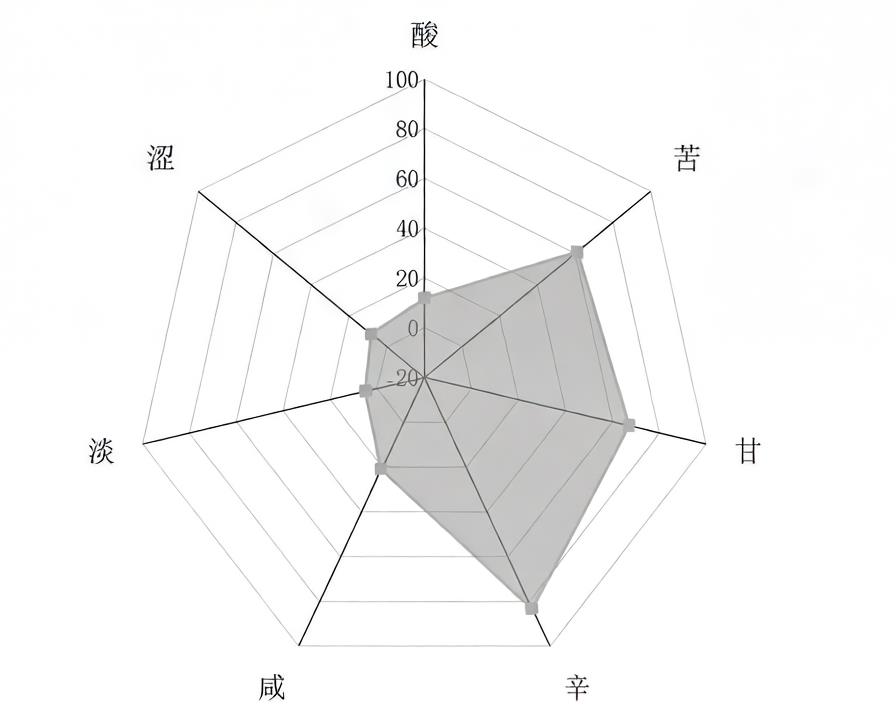
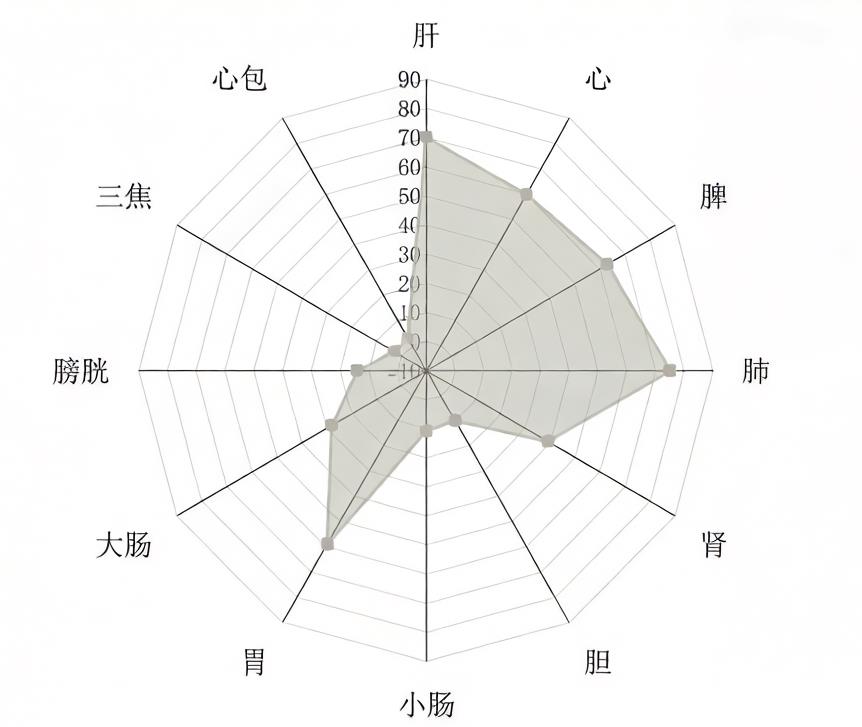
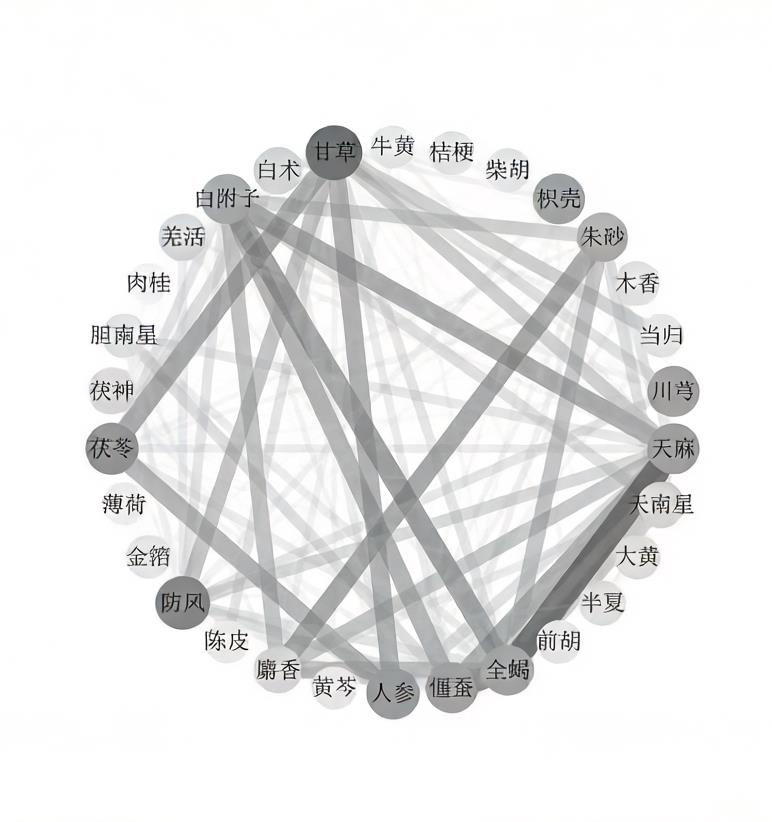
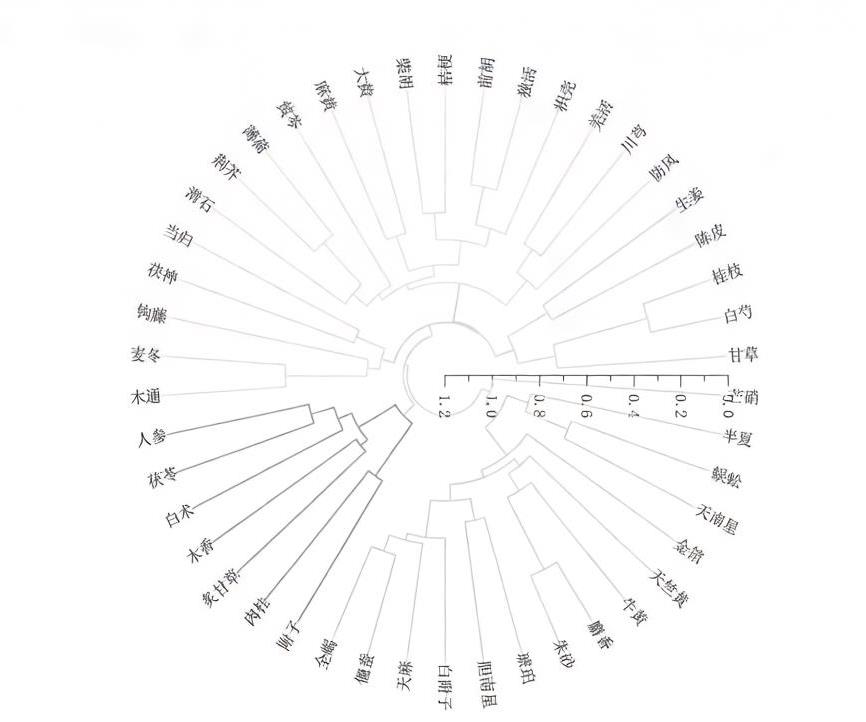
目的 采用数据挖掘技术,通过对湖湘儿科医派治疗小儿抽动症的临床经验和用药特色进行分析,为临床治疗小儿抽动症提供思路和参考。 方法 通过收集《湖湘名医典籍精华丛书》中治疗小儿抽动症的处方,录入Excel 2021建立数据库,运用IBM SPSS Statistics 27.0平台将标准化的中药处方数据进行药物使用频次及频率、性味、归经、功效、关联规则、层次聚类分析,通过Origin 2024、ModelerClient进行结果可视化。 结果 共纳入中药处方127张,共计117味中药,药物使用总频次为995次。药性药味中,药性以温、寒为主,药味以辛、甘为主;归经以肺经、脾经为主,肝经、心经次之;药物关联规则分析常用药物组是“僵蚕-全蝎,白附子”“天麻-白附子、全蝎”;药物聚类分析将药味频数>5的高频中药聚为6类,分别是C1(甘草、白芍、桂枝、陈皮、生姜);C2(防风、川芎、羌活、枳壳、独活、前胡、桔梗、柴胡、大黄、麻黄、黄芩、薄荷、荆芥、滑石);C3(当归、茯神、钩藤、麦冬、木通);C4(人参、茯苓、白术、木香、炙甘草、肉桂、附子);C5(全蝎、僵蚕、天麻、白附子、胆南星、琥珀、朱砂、麝香、牛黄、天竺黄、蜈蚣、半夏);C6(芒硝)。 结论 湖湘儿科医派多从平肝、理脾、化痰的角度治疗小儿抽动症,形成了“补益后天之本,益气健脾为主,以平肝息风、化痰止痉为辅”的独特风格,具备“主辅分明、药类协同、配伍严谨”的特征,以“健脾为本、息风化痰为标”的核心思想。

关键词: 抽动症, 数据挖掘, 湖湘医派, 临床经验, 用药特色, 儿童

Abstract:

Objective Using data mining techniques to analyze the clinical experience and medication characteristics of the Huxiang School of Pediatric Medicine in treating pediatric tic disorders, this study aims to provide insights and references for the clinical management of pediatric tic disorders. Methods By collecting prescriptions for treating pediatric tic disorders from Essence of Famous Doctors' Classics in Huxiang, we input the data into Excel 2021 to establish a database. Using the IBM SPSS Statistics 27.0 platform, we analyzed the standardized TCM prescription data, including drug usage frequency, properties and flavors, meridian tropism, efficacy, association rules, and hierarchical clustering. The results were visualized using Origin 2024 and ModelerClient. Results A total of 127 TCM prescriptions were included, involving 117 Chinese medicinal herbs, with a total drug usage frequency of 995 times. Regarding properties and flavors, the dominant properties were warm and cold, while the predominant flavors were pungent and sweet. In terms of meridian tropism, the lung and spleen meridians were the most frequently involved, followed by the liver and heart meridians. Analysis of drug association rules revealed commonly used drug combinations, including "Bombyx Batryticatus(Jiangcan)–Scorpio (Quanxie), Typhonium Rhizome(Baifuzi)" and "Gastrodia Rhizome(Tianma)–Typhonium Rhizome(Baifuzi), Scorpio(Quanxie)".Hierarchical clustering analysis was performed on high-frequency herbs with usage frequency>5, resulting in 6 clusters, which were as follows:C1: Glycyrrhiza Radix et Rhizoma(Gancao), Paeoniae Radix Alba(Baishao), Cinnamomi Ramulus(Guizhi), Citri Reticulatae Pericarpium(Chenpi), Zingiberis Rhizoma Recens(Shengjiang);C2: Saposhnikoviae Radix(Fangfeng), Chuanxiong Rhizoma(Chuanxiong), Notopterygii Rhizoma et Radix(Qianghuo), Aurantii Fructus(Zhike), Angelicae Pubescentis Radix(Duhuo), Peucedani Radix(Qianhu), Platycodonis Radix(Jiegeng), Bupleuri Radix(Chaihu), Rhei Radix et Rhizoma(Dahuang), Ephedrae Herba(Mahuang), Scutellariae Radix(Huangqin), Menthae Herba(Bohe), Schizonepetae Herba(Jingjie), Talcum(Huashi);C3: Angelicae Sinensis Radix(Danggui), Poria cum Radix Pini(Fushen), Uncariae Ramulus Cum Uncis(Gouteng), Ophiopogonis Radix(Maidong), Akebiae Caulis(Mutang);C4: Ginseng Radix et Rhizoma(Renshen), Poria(Fuling), Atractylodis Macrocephalae Rhizoma(Baizhu), Aucklandiae Radix(Muxiang), Glycyrrhizae Preparata Radix(Zhigancao), Cinnamomi Cortex(Rougui), Aconiti Lateralis Radix Praeparata(Fuzi)C5: Scorpio(Quanxie), Bombyx Batryticatus(Jiangcan), Gastrodia Rhizome(Tianma), Typhonium Rhizome(Baifuzi), Arisaema Cum Bile(Dannanxing), Amber(Hupo), Cinnabaris(Zhusha), Moschus(Shexiang), Bovis Calculus(Niuhuang), Bambusae Concretio Silicea(Tianzhuhuang), Scolopendra(Wugong), Pinelliae Rhizoma(Banxia);C6: Natrii Sulfas(Mangxiao). Conclusion The Huxiang School of Pediatric Medicine treats pediatric tic disorders mostly from the perspectives of soothing the liver, regulating the spleen and resolving phlegm, forming a distinctive approach characterized by "tonifying the acquired foundation and focusing on benefiting qi and invigorating the spleen, with soothing the liver to calm endogenous wind and resolving phlegm to stop convulsions as auxiliary therapies". It features a clear differentiation between the principal and auxiliary treatments, synergistic effects of medicinal categories and rigorous compatibility of herbs, and adheres to the core philosophy of "taking invigorating the spleen as the root and calming wind to resolve phlegm as the apparent treatment".

Key words: Tic disorders, Data mining, Huxiang Medical School, Clinical experience, Medication characteristics, Child

中图分类号: