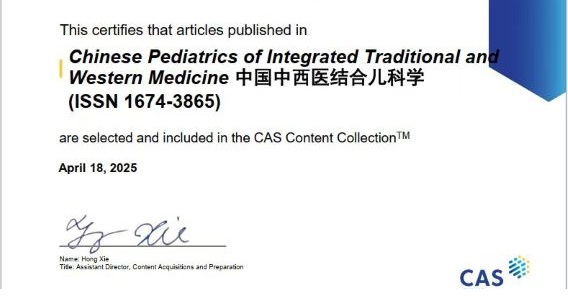
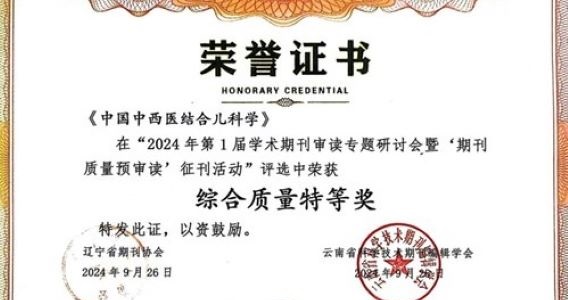
ISSN 1674-3865  CN 21-1569/R
主管:国家卫生和计划生育委员会
主办:中国医师协会
   辽宁省基础医学研究所
   辽宁中医药大学附属医院
25 October 2025, Volume 17 Issue 5 Previous Issue   
Clinical experience of Professor Dong Youqi in treating children's allergic rhinitis with winter ointments
Shiqin ZHAO, Youqi DONG
2025, 17 (5):  369-372.  doi: 10.20274/j.cnki.issn.1674-3865.2025.05.001
Abstract ( 73 )   HTML ( 4 )   PDF (593KB) ( 14 )  

Allergic rhinitis is a common nasal disease in children, characterized by sudden and recurrent episodes of nasal itching, sneezing, clear nasal discharge, nasal congestion, etc. It is often accompanied by allergic conjunctivitis, eczema, asthma, adenoid hypertrophy, sinusitis, epistaxis and sleep breathing disorders. The causes of this disease can be divided into internal and external factors. External factors include invasion of wind, cold, heat or foreign qi into the nasal cavity, while internal factors involve congenital insufficiency and deficiency of the lung, spleen and kidney. Professor Dong Youqi believes that this disease is the result of the interaction between internal and external factors, and the core pathogenesis is the dysfunction of the lung, spleen and kidney as the root and the invasion of external pathogenic factors as the superficial cause, leading to instability of the body's defense mechanism, retention of pathogenic factors in the nasal cavity, and disharmony of qi movement. As one of the eight types of traditional Chinese medicine preparations (pill, powder, ointment, pellet, wine, syrup, decoction, and pastille), ointment has the comprehensive effects of tonifying and nourishing as well as disease treatment and prevention. Children's ointments have the characteristics of individualized prescriptions, mild and harmonious ingredients, convenient administration, and good taste. This article takes the clinical experience of Professor Dong Youqi, a national master of traditional Chinese medicine, as the starting point, who uses winter ointments to treat children's allergic rhinitis, and summarizes and provides examples of the formula composition and dosage of children's ointments based on syndrome differentiation, emphasizing that ointments can improve the constitution of children by tonifying deficiencies and regulating the internal organs, thereby reducing the recurrence rate of the disease. It aims to provide new ideas for the diagnosis and treatment of children's allergic rhinitis with traditional Chinese medicine and offer references for the clinical standardization and promotion of children's ointments.

References | Related Articles | Metrics
Case of treating pediatric nasal cavity based on the theory of "Five Depressions"
Yanyan SU, Jianhui YANG, Zhongfa FENG, Jiaxuan WEI
2025, 17 (5):  373-377.  doi: 10.20274/j.cnki.issn.1674-3865.2025.05.002
Abstract ( 61 )   HTML ( 0 )   PDF (715KB) ( 9 )  

Based on the Five Depression Theory from Huangdi Neijing, this study establishes a dynamic diagnosis and treatment system of "Five Depressions Transmission and Deficiency-Excess Transformation" systematically elucidating the intrinsic connections between wood depression, fire depression, earth depression, metal depression, water depression and the pathogenesis of pediatric nasal obstruction. The Five Depression result from "disordered five-phase movements causing dysfunction in qi circulation" requiring clinicians to "observe the harm of six climatic factors and follow the trends of five elements" while applying the five methods—"releasing, dispersing, draining, purging, and suppressing"—to regulate qi movement. Specifically: Jueyin wind-wood syndrome should be treated with dispersing and freeing the orifices; Shaoyang ministerial fire syndrome requires venting heat pathogens; Taiyin damp-earth syndrome necessitates removing obstructions; Yangming dry-metal syndrome calls for moistening and nourishing collaterals; Taiyang cold-water syndrome demands warming and resolving cold retention. Special attention should be paid to the changes in the pathogenesis of the "Five Depressions Transmission and Deficiency-Excess Transformation". Treatment should focus on "resolving depression and regulating the pivot, and guiding according to the situation". This research provides novel therapeutic approaches for the clinical prevention and treatment of pediatric nasal obstruction.

References | Related Articles | Metrics
Exploring prevention and treatment strategies for pediatric allergic rhinitis based on the theory of "Preventive Medicine"
Jiahang LI, Hai WANG
2025, 17 (5):  378-381.  doi: 10.20274/j.cnki.issn.1674-3865.2025.05.003
Abstract ( 68 )   HTML ( 1 )   PDF (579KB) ( 34 )  

Pediatric allergic rhinitis is a common chronic respiratory disease with a significantly increasing incidence in recent years, severely affecting the quality of life and health of affected children. The theory of "Preventive Medicine" in traditional Chinese medicine(TCM), which serves as the core concept in TCM's approaches to disease prevention and treatment, encompasses three aspects: prevention before illness, prevention of disease progression, and prevention of relapse after recovery. This paper explores prevention and treatment strategies for pediatric allergic rhinitis from three aspects by deeply analyzing the theoretical connotations of "Preventive Medicine" and considering the physiological and pathological characteristics of children, aiming to enhance clinical efficacy, reduce recurrence rates, and promote healthy growth of children.

References | Related Articles | Metrics
Mechanism and research progress of gut microbiota involved in neonatal jaundice
Xin PENG, Yuqian WANG, Liu YANG
2025, 17 (5):  382-386.  doi: 10.20274/j.cnki.issn.1674-3865.2025.05.004
Abstract ( 58 )   HTML ( 0 )   PDF (607KB) ( 29 )  

The neonatal period represents a critical period for gut microbiota colonization and immune system development, exerting profound impacts on individual health. Neonatal jaundice is the most common clinical manifestation during this period, and its pathological process is closely associated with the imbalance of bilirubin metabolism. Gut microbiota plays a pivotal role in bilirubin metabolism through regulating the enterohepatic circulation. This review systematically reviews the composition and development of neonatal gut microbiota, provides an in-depth analysis of its role in bilirubin metabolism and its effects on serum bilirubin levels, and elaborates in detail on the potential mechanisms of enzymatic reactions, immune regulation and intestinal barrier function that affect bilirubin metabolism. The aim is to provide theoretical basis for clinical prevention and treatment of neonatal jaundice, thereby promoting the healthy development of neonates.

References | Related Articles | Metrics
Etiology and pathogenesis of pediatric pneumonia from the perspective of the "Prolonged-Lying-Impairs-Qi" theory and the collaborative strategy of integrated Chinese-western medicine treatment
Yuang LI, Kejin AN, Chuanqi ZHAO, Shirui SUN, Yuran WANG, Changqing SHEN, Na LI
2025, 17 (5):  387-391.  doi: 10.20274/j.cnki.issn.1674-3865.2025.05.005
Abstract ( 62 )   HTML ( 0 )   PDF (671KB) ( 21 )  

Pediatric pneumonia progresses rapidly with a tendency of swift pathological changes, and prolonged lying with reduced activity is a significant intrinsic predisposing factor. Based on the traditional Chinese medicine (TCM) theory of "Prolonged Lying Impairs Qi" and considering the physiological characteristics of children——the delicate and immature viscera and underdeveloped Qi activity, this article systematically analyzes the mechanism by which "prolonged lying" damages the functional activities of Qi (Qi activity) in the lungs and spleen. It emphasizes the critical role of this mechanism in the onset, prolongation, and recovery of pediatric pneumonia. By integrating modern research, the article confirms that "prolonged lying" can reduce pulmonary function and immune levels, substantiating its pathogenic basis. Furthermore, it proposes an collaborative model of integrated Chinese-western medicine treatment, which combines infection control with TCM approaches of regulating Qi and reinforcing vital energy (Fuzheng) to improve symptoms and promote recovery. At the nursing level, we emphasize a trinity strategy of intervention: management of lying in bed, dietary therapy, and emotional support. Starting from the integration of traditional theory with modern evidence, this paper provides a systematic and feasible new approach to the prevention and treatment of pediatric pneumonia with integrated Chinese-western medicine.

References | Related Articles | Metrics
Research progress on conservative treatment and integrated traditional Chinese and western medicine treatment for adolescent idiopathic scoliosis
Hui LIANG, Xifan MEI
2025, 17 (5):  392-396.  doi: 10.20274/j.cnki.issn.1674-3865.2025.05.006
Abstract ( 72 )   HTML ( 0 )   PDF (579KB) ( 13 )  

Adolescent idiopathic scoliosis(AIS), a complex three-dimensional spinal deformity, represents the most prevalent spinal disorder among adolescents, significantly compromising the physical, physiological and psychological well-being of adolescents. This article systematically reviews the intervention strategy of assessment-treatment-reassessment for AIS through a rehabilitation perspective, which breaks through the barrier of assessment and traditional Chinese and western medicine treatment under the existing mode. A multi-dimensional framework is proposed by integrating multidisciplinary technologies with treatment modalities. The paper discusses the comprehensive assessment of AIS, as well as the scoliosis-specific exercise therapy, brace therapy, traditional Chinese rehabilitation techniques and the current status of integrated Chinese and western medicine treatment. The aim is to provide rational theoretical support and practical references for AIS treatment.

Figures and Tables | References | Related Articles | Metrics
Study on the mechanism of action of renal resident cells in lupus nephritis based on NF-κB
Hongxun HUANG, Weiwei LI
2025, 17 (5):  397-401.  doi: 10.20274/j.cnki.issn.1674-3865.2025.05.007
Abstract ( 54 )   HTML ( 0 )   PDF (569KB) ( 10 )  

Lupus nephritis (LN) is an immunocomplex nephritis caused by systemic lupus erythematosus (SLE) involving the kidneys. The main manifestation of LN is the deposition of autoantibodies and their immunocomplexes in the kidneys, which triggers a chronic inflammatory infiltration and the gradual destruction of the structure and function of the kidneys. The renal resident cells play a crucial role in this process. Recent studies have shown that nuclear factor-kappa B (NF-κB) can regulate the gene expression of multiple cytokines, growth factors and adhesion molecules in the progression of inflammation, such as the expression of monocyte chemoattractant protein-1 and granulocyte-macrophage colony-stimulating factors in mesangium and glomerular epithelial cells. NF-κB is closely related to the development of LN and plays a unique role in targeting and regulating the biological responses of renal resident cells, including renal mesangial cells, podocytes and tubular epithelial cells. Against this background, this article reviews the relationship between NF-κB and renal resident cells and their role in the pathogenesis of LN, with an aim to gain a deeper understanding of the underlying cellular and molecular mechanisms involved in LN and provide theoretical references for application in LN prevention and treatment.

References | Related Articles | Metrics
Investigating the therapeutic role of Wuhu decoction for airway inflammation in mice with asthma caused by RSV-induced exosomes
Zhi ZHOU, Mengqing WANG, Yinhe LUO, Bing YAO, Jinglei LIU, Guohong WANG, Xueyi LI, Xiao MA
2025, 17 (5):  402-409.  doi: 10.20274/j.cnki.issn.1674-3865.2025.05.008
Abstract ( 60 )   HTML ( 0 )   PDF (743KB) ( 38 )  

Objective To investigate the effects of Wuhu decoction on airway inflammation-related indicators in asthmatic mice induced by respiratory syncytial virus (RSV)-primed bone marrow mesenchymal stem cell-derived exosomes(BMSCs-Exo-RSV). Methods The asthma mouse model was established by intranasal administration of BMSCs-Exo-RSV. Sixty SPF-grade male C57 mice were randomly divided into six groups(n=10 per group): control group, BMSCs-Exo-RSV model group, ribavirin intervention group, and low-, medium-, and high-dose Wuhu decoction intervention groups. Interventions were performed and recorded once daily for two weeks. After the experiment, the behaviors of the mice in each group were compared. Pulmonary function testing using the DSI Buxco PFT system was conducted to measure residual volume/total lung capacity ratio(RV/TLC) and airflow limitation of the pulmonary function of mice; histopathological changes of lung tissues were compared via Masson and HE staining;ELISA quantification of IFN-γ, IL-12, IL-4, and IL-6 levels in bronchoalveolar lavage fluid(BALF) was performed; qPCR was used to determine microRNA-144(miRNA-144) expression. Results Compared with the control group, BMSCs-Exo-RSV model mice exhibited clinical symptoms(tachypnea, nasal scratching, sneezing, weight loss), elevated RV/TLC(P<0.01) that indicated airflow limitation, aggravated inflammatory injury of lung tissues by pathological examination, decreased IFN-γ and IL-12(P<0.01) and increased IL-4 and IL-6(P<0.01) in BALF that further suggested formation of airway inflammation, and upregulated miRNA-144(P<0.01). Compared with model group, Wuhu decoction(all doses) and ribavirin groups showed improvement in clinical symptoms of tachypnea, nasal scratching, sneezing and weight loss, airflow limitation was reduced(P<0.01), pulmonary inflammation was improved, IFN-γ and IL-12(P<0.01) increased while IL-4 and IL-6 decreased(P<0.01) in BALF, and the expression of miRNA-144 decreased(P<0.01). Conclusion Wuhu decoction effectively modulates immune balance and alleviates airway inflammation in BMSCs-Exo-RSV-induced asthmatic mice, which may be related to its inhibition of miRNA-144 upregulation.

Figures and Tables | References | Related Articles | Metrics
Analysis of expert questionnaire on TCM syndromes of community-acquired pneumonia in children based on Delphi method
Qian LIU, Xuefeng WANG, Xiuying ZHANG, Xinran FENG, Yanyan NI, Zhifan TIAN, Hui WANG
2025, 17 (5):  410-417.  doi: 10.20274/j.cnki.issn.1674-3865.2025.05.009
Abstract ( 60 )   HTML ( 0 )   PDF (629KB) ( 39 )  

Objective To investigate the diagnostic experience of experts on the syndrome of community-acquired pneumonia(CAP) in children by using the Delphi method, screen for the diagnostic indicators of syndromes, evaluate their importance, and provide evidence for the formulation of diagnostic standards for pediatric CAP. Methods Based on literature research, a questionnaire survey was conducted among selected experts using the Delphi method. The results of the questionnaire were statistically processed using Excel and SPSS 27.0 software, and the expert positive coefficient, expert authority coefficient, and the expert opinion coordination degree and concentration degree were calculated. Results A total of 30 domestic experts were selected for the questionnaire survey, with a questionnaire recovery rate of 90%. The expert authority coefficient was 0.905, and the expert coordination coefficient was 0.348(P<0.001). A total of 8 syndrome types were set up in the first round of expert questionnaire survey, including syndrome of heat pathogen blocking the lung, syndrome of lung and spleen-qi deficiency, syndrome of damp-heat blocking the lung, syndrome of wind-cold blocking the lung, syndrome of wind-heat blocking the lung, syndrome of toxic-heat blocking the lung, syndrome of phlegm-heat blocking the lung and syndrome of yin-deficiency with lung-heat, and their syndrome characteristics were analyzed. Conclusion This study initially explores the distribution pattern and characteristics of TCM syndromes in pediatric CAP, laying a foundation for subsequent researches on the diagnostic standards and clinical studies of TCM syndromes in pediatric CAP.

Figures and Tables | References | Related Articles | Metrics
Cost-effectiveness analysis of traditional Chinese medicine and western medicine in the treatment of influenza in children
Wei SHAO, Xifan MEI, Feng WANG, Fei YU, Sunjun YIN, Dan HAN
2025, 17 (5):  418-423.  doi: 10.20274/j.cnki.issn.1674-3865.2025.05.010
Abstract ( 84 )   HTML ( 0 )   PDF (801KB) ( 18 )  

Objective To compare the cost-effectiveness of Xiaoer Feire Kechuan granules(XFK)with that of oseltamivir phosphate granules in the treatment of pediatric influenza to evaluate their economic value. Methods A decision tree model was developed from the perspective of the healthcare system to conduct a cost-effectiveness analysis. Univariate and probabilistic sensitivity analyses were performed to evaluate how parameter variations influenced the study outcomes. Results The incremental cost-effectiveness ratio(ICER) of XFK compared to oseltamivir phosphate granules was ¥96.8. The probabilistic sensitivity analysis results showed that over a 5-day treatment cycle, when the willingness-to-pay(WTP) exceeded ¥260, XFK became the more cost-effective option. Univariate sensitivity analysis indicated that the price of oseltamivir phosphate granules was the most sensitive factor among all the factors of ICER. Conclusion When the willingness-to-pay is over ¥260, XFK demonstrates a cost-effective advantage in the treatment of pediatric influenza.

Figures and Tables | References | Related Articles | Metrics
Analysis of clinical related factors of glucocorticoid-induced ocular hypertension in children with primary nephrotic syndrome
Ruiying PAN
2025, 17 (5):  424-428.  doi: 10.20274/j.cnki.issn.1674-3865.2025.05.011
Abstract ( 56 )   HTML ( 0 )   PDF (556KB) ( 15 )  

Objective To analyze the incidence of glucocorticoid-induced ocular hypertension(GIOH) and its clinical risk factors in children with primary nephrotic syndrome(PNS) during glucocorticoid treatment. Methods A single-group prospective cohort study was conducted. Eighty-two children with PNS receiving glucocorticoid treatment from June 2021 to June 2024 were enrolled. Dynamic intraocular pressure(IOP) monitoring was performed every month, and patients were divided into GIOH group(29 patients) and non-GIOH group(53 patients) based on whether GIOH occurred. The demographic data, clinical classification, glucocorticoid treatment duration, and treatment regimen were collected. Intergroup differences were analyzed using chi-square tests, Fisher's exact tests, and Mann-Whitney U tests, and independent risk factors were analyzed via Logistic regression analysis. Results The overall incidence of GIOH was 35.4%(29/82). The incidence in females was 58.8%(10/17), significantly higher than that in males(29.2%, 19/65)(P=0.023). Multivariate analysis confirmed female as an independent risk factor(OR=3.75, 95%CI: 1.15–12.73, P=0.028). The incidence was highest in preschool-aged children(47.8%, 11/23); however, age, duration of glucocorticoid use, pathological type, and treatment regimen showed no significant correlation with GIOH(P>0.05). A total of 55.2%(16/29) of children required IOP-lowering medication. None of the children progressed to glaucoma or cataract after intervention. Conclusion During glucocorticoid treatment for PNS, females and preschool-aged children have a higher risk for GIOH. Dynamic IOP monitoring and early intervention can effectively prevent visual impairment, making this approach suitable for clinical promotion..

Figures and Tables | References | Related Articles | Metrics
Discussion on treatment for adenoid hypertrophy in children based on the theory of "Removing the Earth Stagnation"
Yeting JIANG, Oumei HAO, Xuefeng WANG, Kexin ZHANG
2025, 17 (5):  429-432.  doi: 10.20274/j.cnki.issn.1674-3865.2025.05.012
Abstract ( 65 )   HTML ( 0 )   PDF (616KB) ( 6 )  

The aim is to explore the guiding significance of the theory of "Removing the Earth Stagnation" in the treatment of adenoid hypertrophy in children, and to analyze its pathogenesis (obstruction of qi movement in middle energizer, disorder of water metabolism, obstruction of qi and blood circulation) and clinical typing (qi stagnation, dampness stagnation, phlegm stagnation, blood stasis stagnation). It is clarified that the pathogenesis of adenoid hypertrophy is closely related to "Earth Stagnation", and the treatment should focus on removing stagnation; hence, the treatment principle of "Removing the Earth Stagnation" was put forward, including strengthening the spleen and regulating qi to restore the transportation and transformation of the middle energizer, promoting diuresis and eliminating phlegm to regulate water metabolism, and removing blood stasis and dredging orifices to promote the circulation of qi and blood.Through the staged treatment and removing method, both manifestations and causes can be managed, clinical symptoms are improved, the normal physiological functions of the body are restored, and ultimately the therapeutic goal is achieved, including smooth movement of spleen qi, normal mechanism of qi, smooth flow of fluid, good circulation of qi and blood, and clearance of nasal orifices. The theory of "Removing the Earth Stagnation" provides effective clinical ideas for the treatment of adenoid hypertrophy in children with traditional Chinese medicine.

References | Related Articles | Metrics
Collection of experience in the treatment of children's tic disorders(activation-by-external-wind syndrome) based on the theory of latent wind
Defang YUE, Liping SUN
2025, 17 (5):  433-436.  doi: 10.20274/j.cnki.issn.1674-3865.2025.05.013
Abstract ( 55 )   HTML ( 0 )   PDF (574KB) ( 11 )  

Tic disorders, a prevalent pediatric mental condition, has exhibited a yearly increase in both incidence and recurrence rates, posing significant challenges to treatment. In clinical practice, Master Sun Liping has observed that tic symptoms tend to exacerbate or the disease may recur after external infections. According to Master Sun, such cases are caused by latent wind harboring in the liver, which is activated by external wind. The interaction between internal and external winds, compounded by phlegm, contributes to the disorder. Therefore, based on the theory of latent wind, Professor Sun advocates for the integration of wind-dispelling and exterior-releasing drugs targeting the liver meridian with liver-calming and wind-stopping agents. This therapeutic strategy addresses the liver and lung at the same time, emphasizing wind-dispelling and exterior-releasing as the primary focus while incorporating liver-calming and activation-stopping as supplementary measures. This approach has demonstrated favorable clinical outcomes.

References | Related Articles | Metrics
A brief analysis of Professor Wang Lining's experience in pediatric clinical diagnostic methods
Zhifeng LI, Lining WANG, Guangqing WANG, Yongzhi YAO, Han LIU
2025, 17 (5):  437-441.  doi: 10.20274/j.cnki.issn.1674-3865.2025.05.014
Abstract ( 59 )   HTML ( 0 )   PDF (640KB) ( 11 )  

This article focuses on the clinical experience of Professor Wang Lining, a renowned traditional Chinese medicine (TCM) practitioner in Guangxi and a national instructor for inheriting the academic expertise of senior TCM doctors. Professor Wang comprehensively applies various diagnostic methods of TCM to the clinical practice, including inspection, listening/smelling, inquiry, and palpation(wang-wen-wen-qie), specifically tailored to the characteristics of pediatrics, which are often referred to as the "silent specialty" due to children's limited ability to express symptoms. Professor Wang emphasizes the integration of TCM theory with modern clinical practice. Based on the clinical features of children, she stresses detailed history taking at the diagnostic level. Through a standardized model of history collection, she dynamically tracks the evolution of the disease to ensure that the information is prompt, objective, and accurate. She places significant importance on inspection, innovatively proposing "infraorbital ecchymosis" (dark circles under the eyes) as a phenotypic marker for atopic constitution. She formulated multi-dimensional mode of inspection by differing the cold from the hot based on the throat color and analyzing the cause of disease according to the changes in tongue, which deeply correlates the signs on body surface with visceral pathology. Considering the limitations of pulse diagnosis in children, she introduces the theory of "xuli"(the area of the apex beat) from the Huangdi Neijing, integrating the TCM diagnostic approach of"xuli"with modern auscultation techniques. and she uses cardiopulmonary auscultation to assess the state of pectoral qi (zongqi) and the trend of disease change. Professor Wang also emphasizes the combination of pulse findings with clinical manifestations (syndrome differentiation), advocating to "discard the pulse and focus on the syndrome"(shemai congzheng), when the pulse signs are not in accordance with the actual clinical presentation. This diagnostic model, characterized by upholding integrity and pursuing innovation, not only improves the objectivity of the four diagnostic methods in pediatrics but also promotes the standardization and precision of TCM pediatric diagnostics, holding significant academic value for improving strategies for the prevention and treatment of childhood diseases.

References | Related Articles | Metrics
Experience of Professor Chang Ke in treating damp-heat syndrome of mycoplasma pneumoniae pneumonia in children with the method of dredging obstruction and resolving turbidity(Xuanbi Huazhuo)
Jiayu LI, Yuan SUN, Xin FENG, Ke CHANG
2025, 17 (5):  442-446.  doi: 10.20274/j.cnki.issn.1674-3865.2025.05.015
Abstract ( 64 )   HTML ( 0 )   PDF (706KB) ( 13 )  

This paper summarizes Professor Chang Ke's experience in treating damp-heat syndrome of mycoplasma pneumoniae pneumonia in children with the method of Xuanbi Huazhuo. The core pathogenesis of this disease is that damp-heat stagnates and suppresses clear yang, condenses to form phlegm, and obstructs the lung collaterals. At the beginning, it is due to the stagnation of lung qi and failure in diffusion and descent, leading to the internal retention of dampness and fluid; then, the stagnated dampness turns into heat, which goes upward to the lungs; damp and heat binds together, generating phlegm and turbidity and blocking the lung collaterals, which is the key to the pathological changes. Eventually, damp, heat, phlegm and turbidity interacts with each other. Clinically, there are symptoms such as persistent fever, severe cough with much phlegm, nasal congestion, shortness of breath, chest tightness and phlegm congestion. Some children also have symptoms of damp-heat in the middle jiao, such as nausea and vomiting, poor appetite, yellowish-white or yellow-greasy tongue coating. In view of this, Xuanbi Huazhuo is the main treatment method. The self-made "Xuanjing decoction" is taken orally. It is composed of Shangjiao Xuanbi decoction (decoction for relieving obstruction in the upper Jiao) which can promote the flow of qi, resolve dampness and clear heat, combined with Qianjin Weijing decoction which can clear the lung, resolve phlegm, remove blood stasis and expel turbidity. Almond is added to enhance the functions of dispersing, descending and relieving cough, and talc is added to strengthen the clearing and draining of damp-heat. The whole prescription aims to dredge the obstruction of lung qi and clear away damp-heat, phlegm and turbidity. The empirical formula "Fuxiong powder" for external application helps to dredge the lung collaterals, warm and resolve phlegm and turbidity, disperse stagnation and promote qi flow. This treatment method focuses on the core of damp-heat, phlegm and turbidity obstructing the lung collaterals. It addresses the root cause of the stubborn turbidity by internally dredging the stagnation of qi in the lung collaterals; externally, it diffuses and penetrates through the skin, membranes and interstitial spaces, loosening the phlegm and blood stasis, thus launching a three-dimensional attack on "bi(obstruction)" and "zhuo(turbidity)". Clinical practice has confirmed that it can effectively relieve symptoms, which embodies the characteristics of traditional Chinese medicine in the treatment of this disease and the academic thoughts of Professor Chang Ke.

References | Related Articles | Metrics
An initial exploration of the treatment of childhood short stature based on the theory of "One-Qi Circulation"
Yunshan LUO, Yuan SUN, Tianyin LUO, Xiangjuan SUN
2025, 17 (5):  447-450.  doi: 10.20274/j.cnki.issn.1674-3865.2025.05.016
Abstract ( 49 )   HTML ( 0 )   PDF (593KB) ( 8 )  

Short stature(SS) refers to a condition where an individual's height is lower than the average height of the same ethnicity, age, and gender group by two standard deviations or falls below the third percentile under similar environmental conditions. The concept of "One-Qi Circulation" proposed by Qing Dynasty physician Huang Yuanyu suggests that the central Qi acts as the pivotal force regulating the rise and fall of the body's Qi, and is closely related to the physiological and pathological states of the human body. The development of short stature is associated with weakened or obstructed central Qi, stagnant liver Qi, and imbalances in the water-fire mechanism, leading to impaired overall Qi circulation. The treatment principle is to restore the central Qi and harmonize the "One-Qi" by tonifying the earth element to assist yang, promoting spleen function, and regulating the middle; soothing the liver to relieve stagnation, and regulating Qi circulation; replenishing kidney water, warming yang, and transforming Qi. It is essential to consider the delicate physiological characteristics of children, using mild, clear, and gentle medications. This approach provides a new perspective on the treatment of short stature from the perspective of Qi movement, and a clinical case is presented for reference.

References | Related Articles | Metrics
Professor Xiong Lei's experience in treating pediatric adenoid hypertrophy with aromatic herbs based on the theory of "Deficient Qi and Liquid Stagnation"
Yi JIANG, Lei XIONG, Ting CAO, Yujiang XI
2025, 17 (5):  451-456.  doi: 10.20274/j.cnki.issn.1674-3865.2025.05.017
Abstract ( 49 )   HTML ( 0 )   PDF (668KB) ( 10 )  

Adenoid hypertrophy(AH) is a common pediatric disease characterized by pathological enlargement of the adenoid due to repeated stimulation of inflammation, causing symptoms such as nasal obstruction, snoring, and mouth breathing. It is often associated with obstructive sleep apnea and adenoid facial expression. Based on the theory of "Deficient Qi and Liquid Stagnation" and long-term clinical experience, Professor Xiong Lei proposes that the core pathogenesis of pediatric AH follows a "deficiency-rooted, stagnation-manifested" pattern. Professor Xiong thinks that the root cause of disease is the deficient qi of the lung, spleen and kidney, while the fluid stagnation of such pathological factors as phlegm, dampness and blood stasis is the disease manifestation, exacerbated by external pathogens. Considering the disease features of "deficiency in origin and excess in superficiality", the treatment principle emphasizes "tonifying deficiency, resolving stagnation, and regulating qi dynamics", with the management tailored to disease phases (acute, remission and chronic). Professor Xiong uses aromatic herbs to regulate qi and blood, and uses drug pairs to enhance the effect (agastache–Fritillaria thunbergii, Coix lacryma jobi–Ostrea gigas, and Paeonia lactiflora–Luffa cylindrica). Insect-derived drugs, such as silkworm larva and cicada slough, are also utilized for targeted treatment. By integrating the theory of "Deficient Qi and Fluid Stagnation" with aromatic therapy, this approach of Professor Xiong Lei simultaneously addresses dysfunction of the lung, spleen and kidney while resolving phlegm, dampness and stasis, providing a novel TCM strategy for the prevention and treatment of pediatric AH. A supporting case study is included to validate the clinical efficacy of this method.

References | Related Articles | Metrics
Master Wang Lie's experience in treating children with febrile diseases with the Qinggan prescription of traditional Chinese medicine
Jinwei LI, Lei GUO, Lizhong DING
2025, 17 (5):  457-460.  doi: 10.20274/j.cnki.issn.1674-3865.2025.05.018
Abstract ( 51 )   HTML ( 1 )   PDF (566KB) ( 8 )  

Children are known to be with "pure yang constitution", which is easily affected by external pathogens, leading to fever; also, children don't know how much to eat, resulting in internal heat due to stagnation of the spleen and stomach. Qinggan prescription is an empirical formula created under the guidance of Professor Wang Lie's "toxic heat" theory, having the effects of dispersing wind and resolving exterior symptoms, as well as clearing heat and detoxifying. It is mainly used to treat common cold of wind-heat type. Associate Professor Ding Lizhong, the advisor, is the academic heir to Professor Wang Lie, and by adhering to the principle of "treating different diseases with the same method", he applies Qinggan prescription widely in the treatment of pediatric fever-related diseases such as pharyngitis, pneumonia with wheezing, and hand-foot-mouth disease. This paper elaborates on his clinical experience and introduces three case reports.

References | Related Articles | Metrics